

By Ron Hira
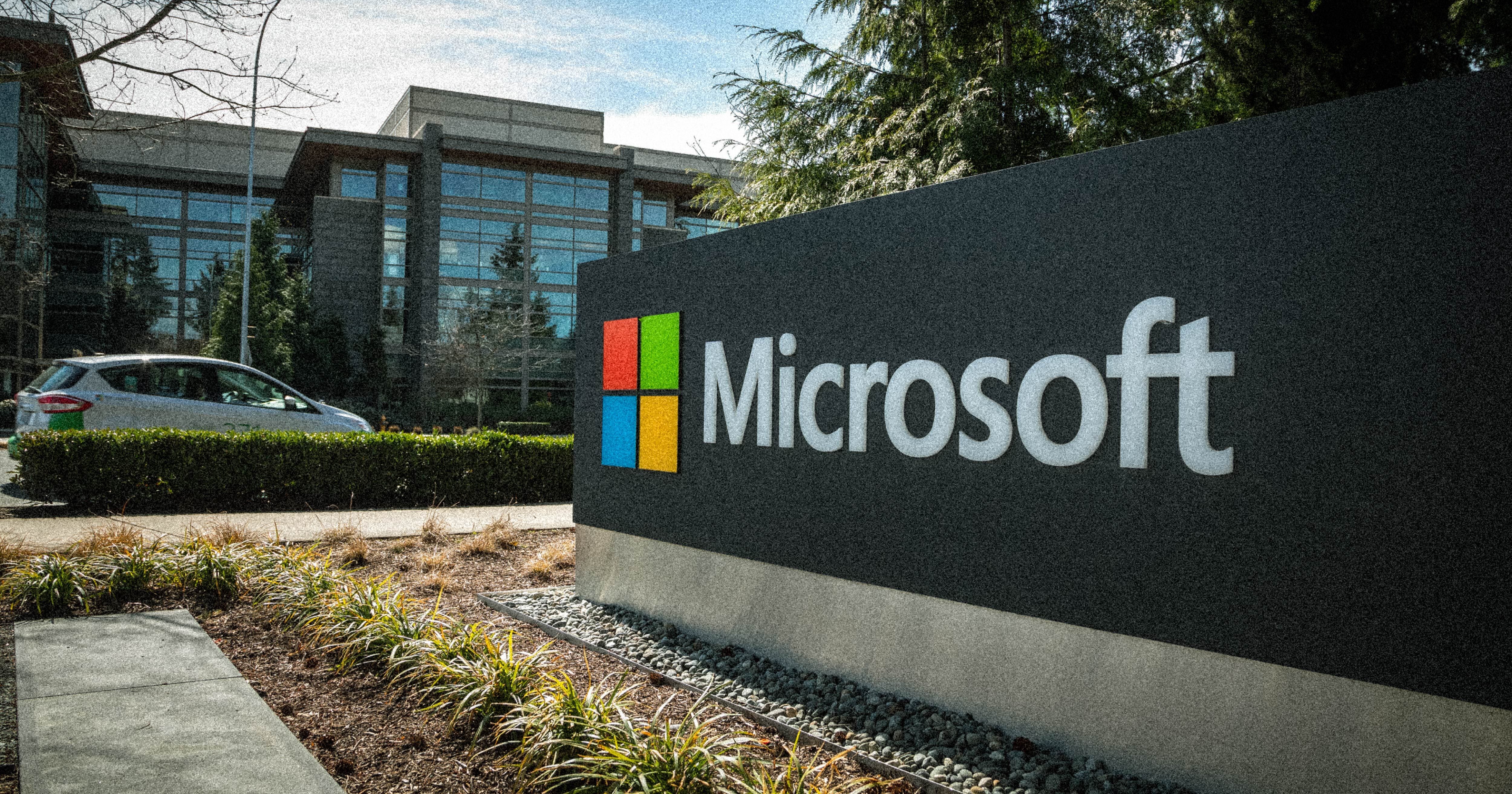
A company like Microsoft, one of America’s great technological innovators, is unaccustomed to harsh public reprimands from the White House. So it reacted with indignation when Vice President JD Vance took to a Washington stage to announce a crackdown on H-1B visa abuse, saying of Microsoft that there had been “no company in the United States, unfortunately, that has abused this system more” and warning it could no longer “lay off American workers and then replace them with foreign indentured servants.”
Microsoft pushed back hard, with company president Brad Smith calling Mr. Vance’s remarks “completely off base.” Someone “had failed to inform the vice president accurately about our numbers,” he said. Most of Microsoft’s applications were for workers already employed, he said, not for new hires.
This is what political operatives call a “non-denial denial.” The vice president had observed that Microsoft is laying off thousands of American workers while simultaneously securing thousands of H‑1B visas and PERM certifications for foreign workers. That’s true. But Congress created those programs to address genuine labor shortages. Microsoft executives Bill Gates and Brad Smith have long embraced that framing, each telling Congress that the company’s voracious demand for foreign workers is driven by a shortage of qualified American tech talent. Why was a company professing a severe shortage requiring thousands of foreign workers while at the same time dismissing thousands of Americans with similar or better skills?
In fact, Microsoft’s abuse of the system is longstanding, and lawmakers have raised concerns for years. As far back as 2009, Senator Chuck Grassley (R-IA) sent a letter to then-CEO Steve Ballmer asking how the company could be announcing 5,000 layoffs so soon after lobbying on Capitol Hill for more H-1B visas. Fast-forward to January 2023, and Microsoft was at it again, announcing plans to lay off 10,000 workers—about 5% of its workforce—and then two months later registering 3,900 positions as needing foreign workers in the FY2024 H-1B lottery.
Were these roles so specialized that no American worker could perform them? Tech leaders rely upon a bait-and-switch, pleading for high-skilled visas to bring the “best and the brightest” into the country and then using the visas to replace entry-level workers. Microsoft’s Smith pointed to President Trump’s recent award of national medals for science and technological innovation to immigrants, warning that enforcing the nation’s immigration laws would apparently “put that at risk.” But Microsoft’s own filings say otherwise. Eighty percent of the new H‑1Bs filled entry‑ or junior‑level positions requiring minimal experience beyond a bachelor’s degree. One‑third of the workers held only a bachelor’s degree, and just 9% had a doctorate.
It strains credulity to suggest that none of Microsoft’s 10,000 laid‑off employees—or the more than 100,000 Americans graduating annually with computer science degrees into a labor market where their cohort faces a recession-level 7% unemployment rate—were qualified or trainable for the jobs it filled instead with foreigners.
The practice of bypassing and replacing American workers is not unique to Microsoft. It is standard among the largest H‑1B employers, including Amazon, Apple, Google, and Meta. The program has long been the subject of scrutiny from a wide range of advocates for American and immigrant workers. Last year, Senator Grassley and Senator Richard Durbin (D‑IL)—the top two members of the Judiciary Committee overseeing immigration policy— pressed Big Tech on this issue. They sent a joint letter to the top ten H‑1B employers, including Microsoft, noting: “In evaluating the high unemployment rate for American tech workers, we cannot ignore the massive, ongoing layoffs ordered by you and your peers in Big Tech C‑suites… At the same time you have been laying off your employees, you have been filing H‑1B visa petitions for [thousands of] foreign workers… With all of the homegrown American talent relegated to the sidelines, we find it hard to believe that [you] cannot find qualified American tech workers to fill these positions.”
The H-1B visa also represents a form of “indentured servitude,” as Vice President Vance called it, an observation echoed by the Economic Policy Institute, former Secretary of Labor Ray Marshall, Immigration Voice (an advocacy group made up of H-1B workers), academics, and India-based journalists and authors. This is not an overstatement. H‑1B workers are legally tied to a single employer, who alone controls their visa. Termination means immediate loss of legal status, which gives employers extraordinary leverage—far beyond what they hold over American workers or green card holders. Workers live in precarity, unable to freely change jobs, negotiate wages, or challenge workplace abuses.
Clearly, the H‑1B program is not functioning as the Department of Labor says it should: a mechanism for employers who “cannot otherwise obtain needed business skills and abilities from the U.S. workforce.” The program needs a major overhaul—through executive action and ultimately through Congress. By finally cracking down on Big Tech’s abuses of our immigration system, Vice President Vance and the Trump administration are forcing corporate America to start taking seriously its duty to American workers.
Ron Hira is an associate professor at Howard University and a research associate with the Economic Policy Institute.
J.D.Vance gave a speech...right before a midterm election. Will it have any more effect than Senators Grassley and Durbin's letter? It would mean going against major contributors.
This is THE BORDER issue for Republicans in 2028. If they don't massively reverse the H1-B and alphabet soup of other Visa programs abuse from their corporate donors, they shouldn't be surprised if the are voted out of office. Many of the non-H1-B programs could be terminated by Executive Action. The fact that they haven't shows how captured the Republicans are by Corporate priorities.