


In 1994, 367 Republican congressional candidates signed on to the eight government reforms and ten concrete policy proposals of Newt Gingrich’s “Contract with America,” powering them to their first House of Representatives majority in 40 years. In 2026, the Grand Old Party and its Speaker of the House, Mike Johnson, are offering the “Contrast for America,” summarized simply (and in all-caps) as “THE 2026 MIDTERMS ARE A CONTRAST FOR AMERICA BETWEEN COMMON SENSE AND CRAZY.” A contrast, indeed.
While the Republican message amounts to little beyond calling the other guys worse, the other guys have precisely the same message. The Democratic National Committee highlights “lower costs” as its top agenda item, but its plan for accomplishing this is “to bring an end to Republican chaos and incompetence, ensuring that Americans can comfortably cover their everyday expenses.” Opposing President Trump is by far the top reason that Democratic midterm voters give for their decision.
The problem with writing off all the nihilism as an inevitable consequence of polarization in the age of Trump is that politicians are generally in the business of trying to win elections and accomplish priorities, and this brand of politics accomplishes neither. The signature policy proposal of this year’s campaign, if one could call it that, is the president’s promise to pay every adult $5,000 if his team wins. It’s not only a vulgar non-idea, but also a dud. It receives positive reviews from 21% of voters; only building data centers is less popular. Both parties are near the nadir of two-decade slides in popularity, and the leading response by far to Gallup’s question about “the most important problem facing this country today” is poor government leadership, more than double the share choosing cost of living. Corruption has suddenly become the top issue for voters.
Angrily saying nothing may lead to short-term electoral success, if only because someone has to win, but it provides no basis for governing. The result is merely more disappointment for voters, a countervailing wave election every two years, and a new Oval Office occupant every four.
What we are facing is not so much political polarization as political exhaustion. One week before Election Day, the DNC’s home page featured identifiable photos of former President Barack Obama, who last ran for office more than a decade ago, Congressman John Lewis, who passed away in 2020, and Reverend Jesse Jackson, who passed away earlier this year, but none of current public officials, let alone candidates. The Republican National Committee’s home page featured only one identifiable person: a photo of President Donald Trump, a second photo of him, a third photo of him popping up over the first two, and a video of his second inauguration. This, for a leader whose approval rating stands at 38%, the lowest of his second term.
The source of this exhaustion is the collapse of each side’s central political commitment—for the Left, “justice”; for the Right, “liberty.” Both of these are, to be sure, worthy commitments. Our Pledge of Allegiance concludes with them. But neither is self-sustaining. To pursue justice by taking every instance of inequality as evidence of oppression, assigning blame in every case to whoever comes out ahead, and then demanding that government act to turn the tables, is no justice at all. To pursue liberty by shrinking government small enough to “drown it in a bathtub” and offering only the choices that market forces make available does not help people to build the lives they want.
For conservatives, liberty once meant the capacity to govern one’s self and to come together with others to achieve self-government in a community. “The independence and liberty you possess,” said George Washington in his Farewell Address, “are the work of joint councils and joint efforts, of common dangers, sufferings, and successes.” Abraham Lincoln explained, “The legitimate object of government, is to do for a community of people, whatever they need to have done, but can not do, at all, or can not, so well do, for themselves—in their separate, and individual capacities.”
In recent decades, that conception of what was called ordered liberty gave way to liberty as license, celebrating an escape from all constraints and the taking of whatever you can get. Deficits didn’t matter so long as taxes went down, even if the next generation would foot the bill. The unfettered ability to shut down American factories and produce instead with oppressed workers in a communist dictatorship became a core tenet of the free market. Efforts at government reform decayed into efforts at wantonly kneecapping it. Legalizing drugs and gambling were priorities, while forming a family and raising children were relegated to lifestyle choices alongside getting a dog or vacationing in Greece.
For progressives, justice ceased to be a unifying principle that should extend uniformly, and became a promise to specific groups, often at the expense of others. Some races were to be favored, or paid reparations, while others were assigned guilt. At the peak of the hysteria following George Floyd’s death in 2020, many saw justice in riots or even looting, justice in abolishing law enforcement agencies and prisons.
“Democrats,” the party explained in its platform that year, “believe we must embed environmental justice, economic justice, and climate justice at the heart of our policy and governing agenda.” For good measure, the platform also included a reproductive justice section and separately pledged to “embed racial justice in every element of our governing agenda.” Defense of the justice system’s integrity somehow necessitated constant efforts at delegitimizing the Supreme Court.
Such agendas produce neither liberty nor justice, only social corrosion that leaves both further from reach and Americans worse off as a result. In a country where the powerful assert that anything goes and that government must merely get out of the way, the public institutions and public virtue necessary to a healthy republic fall by the wayside, and only the powerful find themselves free. “Public Virtue is the only Foundation of Republics,” said John Adams. “There must be a positive Passion for the public good, the public Interest, Honour, Power, and Glory, established in the Minds of the People, or there can be no Republican Government, nor any real Liberty.”
Where leaders pit people against one another, making group identity the ticket to special treatment and showing greater concern for people who undermine public order and safety than for those whose lives depend on it, the result will invariably be unjust. Both parties have reached the dead ends of their dogmatic quests, and neither can find anywhere else to turn. Pollsters have instructed everyone to pivot toward “affordability,” but rebuilding middle-class security requires rebuilding from decades of economic malpractice, not a subsidy here and a tax credit there.
“The modern world is full of the old Christian virtues gone mad,” G.K. Chesterton once wrote. “The virtues have gone mad because they have been isolated from each other and are wandering alone.”
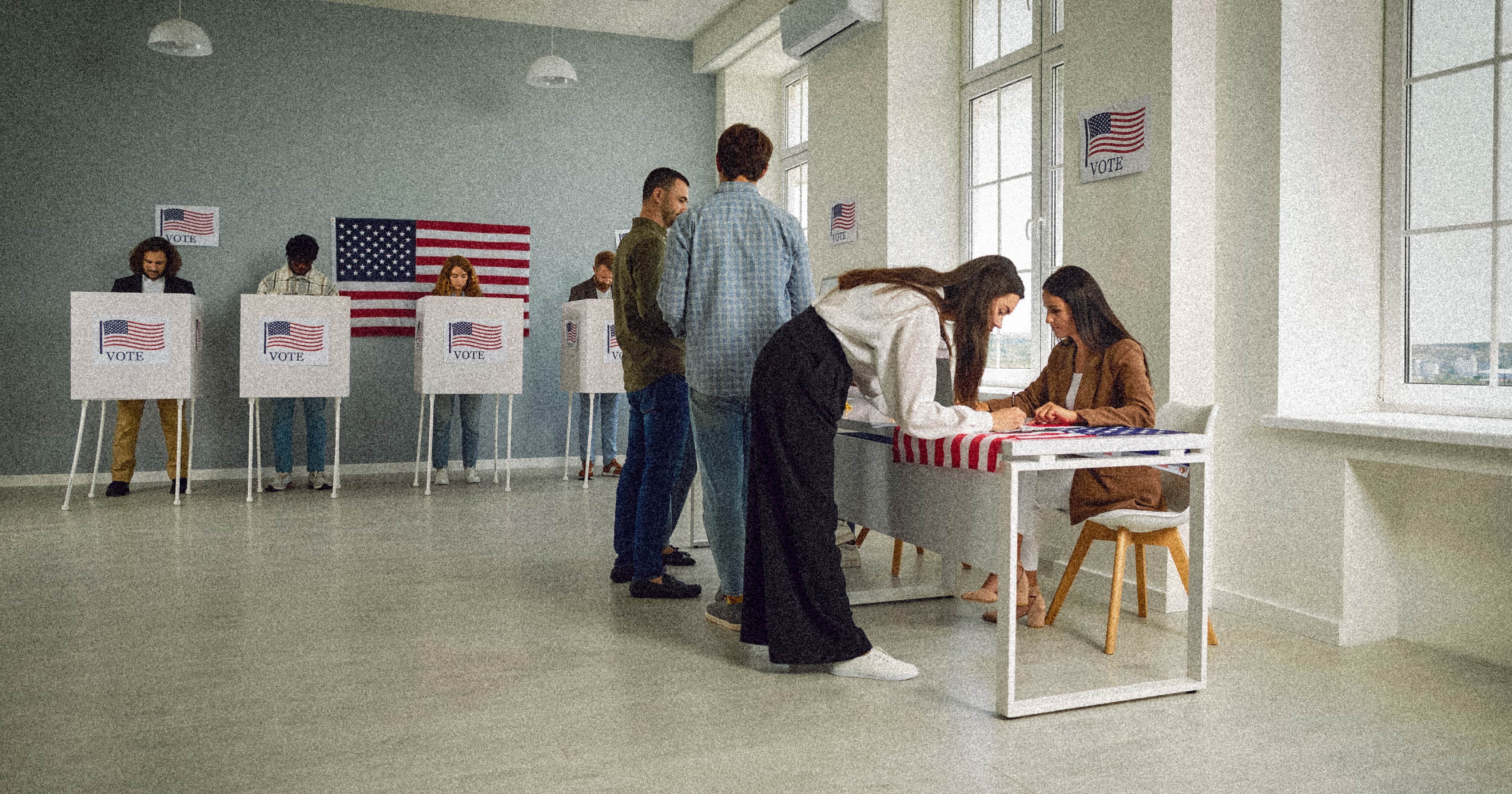
What’s missing from American politics is any concern for the more foundational commitment to our nation as a republic composed of citizens who not only enjoy freedom, but also accept constraint as necessary to it, who not only have rights and privileges, but also owe duties and obligations to one another. Today we discuss citizenship as a legal status or, at its most ennobling, a topic for civics class, with an emphasis on voting and recycling. Historically, the conception was far richer.
Citizenship was the reciprocal bond between countrymen that held the nation together. It “both demands and protects, asking each of us to carry burdens we did not choose, and in return giving us a place, a purpose, and a say in the forces shaping our lives,” we wrote in Reclaiming American Citizenship. “It elevates us as problem-solvers endowed with agency, who come together to do more than any of us could accomplish on our own, securing a liberty grounded in competence and self-determination rather than mere license to do as we please.” Many Americans are familiar with Teddy Roosevelt’s famous speech about “the Man in the Arena.” Many fewer know its title, “Citizenship in a Republic.”
In this direction lies a wide-open freeway awaiting whichever politicians can find it. Throughout history, Americans have flocked to leaders who spoke honestly of common bonds, mutual obligations, and real sacrifice. What’s needed is a genuine commitment to the trade-offs that citizenship requires.
Of course, pursue justice. But pursue it by treating each person as an individual of equal dignity and holding all accountable to the same standard, even when we might prefer other outcomes in particular instances. Justice is achieved and sustained when all have confidence that they too will receive just treatment and thus feel secure in offering it. The social and political equality necessary to human flourishing derives not from taking to some and giving to others, but from a shared conception of citizens as full and equal participants in communal, economic, and national life.
Of course, pursue liberty. But pursue it with the understanding of “the pursuit of happiness” shared by the nation’s founders, for whom happiness meant being good, not feeling good. Liberty is achieved and sustained with the support of strong institutions that help people form families, become productive contributors to their communities, and raise a next generation capable of the same. We can fully enjoy the freedom of democratic self-government and market capitalism only if we recognize ourselves and each other as more than consumers and insist on cultivating our competence and agency.
Beyond reclaiming the concept of citizenship, an agenda capable of delivering on promises of liberty and justice would commit to living within our means: both higher taxes and lower benefits, along with investments in infrastructure and industry that would allow us to produce as much as we consume instead of borrowing from the rest of the world. It would renounce ambitions of empire that appeal to elites who picture themselves dictating global events but leave behind ordinary Americans for whom effective government depends on practical solutions to local problems. It would identify novel technologies and products of our era designed to profit from human frailty and regulate them as we have always regulated such overwhelming and harmful temptations.
Perhaps most importantly, a citizenship agenda would focus on the nation’s collective obligation to better form the next generation of citizens. It would throw away the therapeutic educational fads and the amusement park entitlement of the college campus in favor of equipping young people with the skills and values to build decent lives in their communities, who understand the tenets of justice and feel called upon to uphold them, and who are prepared to shoulder the burdens of self-government.
Both embattled sides of the modern political divide believe they are losing because both are indeed losing. As they dig their holes deeper, they further undermine the liberty and justice that they keep promising, and that the American people desperately want. The Pledge of Allegiance is not a pledge to liberty or justice, but to a flag representing a republic—one nation, under God, indivisible—that can provide those goods.
You can't have a common citizenship if people inhabit different realities.
It might have been nice to hear this a few years ago. But it's still wonderful to hear it today. A reminder of what is really important.