

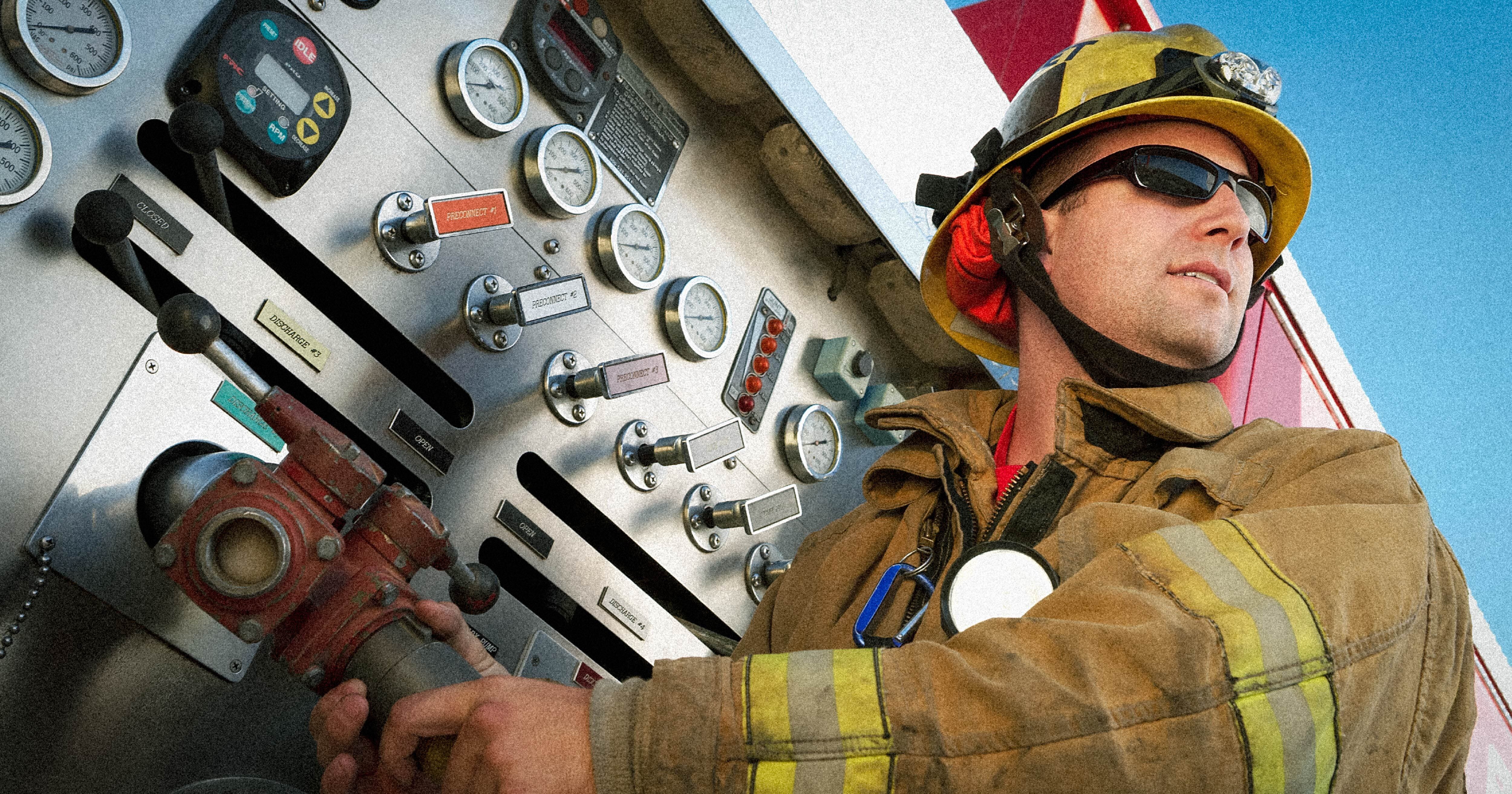
Pasadena, Texas is a town of 150,000 that, when viewed from a map, looks like a 20-mile-long dumbbell oriented from Northwest to Southeast, sprawling from the edges of Houston to the Gulf of America’s estuaries. The town’s northern edge hugs the Houston Ship Channel, dense with refineries and industrial sites, surrounded by low-slung apartment complexes, strip malls, tightly packed ranch homes, and Mexican restaurants. The southern side of town stretches toward Galveston Bay, where subdivisions cluster around inland lakes near NASA’s Johnson Space Center. Between them lies a short, thin commercial corridor—Lonestar Steakhouse, Starbucks, Fairfield Inn, Barnes & Noble—connecting two sides of a city that, in much of America, would rarely mix.
Three Septembers ago, a man deliberately drove his car through a fence and into an above-ground gas pipeline behind the Walmart at the city’s center. The explosion burned for four days. Mark Ferris, a Captain in Pasadena’s Fire Department, remembers that “the fire burned so hot that its radiant heat melted a few houses.” A crew setting up a ground monitor—a small cannon that can project water several hundred feet and can be operated from the safety of a firetruck—had to work in thirty second shifts to avoid getting burned through their gear as they tried to cool off other homes in the area.
Like Ferris, and with the exception of the department’s chief, all 172 members of Pasadena’s fire department are volunteers: the largest municipal volunteer fire department in the country.
Fire department as civic infrastructure
Because Pasadena contains more than 50 square miles and it can take upwards of 45 minutes to drive from one end of town to the other, the city is divided into nine fire districts, each with its own station, equipment, and district chief. Volunteers are required to live within a five-minute drive of their station, and a truck has to be out the door within five minutes of an alarm.
Everyone I talked to in Pasadena acknowledges that there’s a richer and a poorer side of town. Those nine firehouses, and the men and women who respond to calls from them, train in them, work out in them, and hang out in them, help to bind the town together into something more beautiful than rich or poor, brown or white.
If Pasadena’s expanse helps to explain its fire department’s infrastructure, it also points to why, whether they know it or not, its firefighters are bridging divides. Pasadena contains within its oddly shaped city limits many of the lines of division that seemingly separate Americans from one another. One side of town is wealthier than the other. The population is roughly split between white and Hispanic residents. The city spans two congressional districts—one represented by a Republican, the other by a Democrat.
Among firefighters, these distinctions rarely come up. When they do, they’re more likely to be joked about than debated. They’re not talking about their differences, they’re just hanging out and fighting fires.
The department does take on some number of explicitly “civic” tasks—an annual Toys-for-Tots drive, “visits with Santa,” and regular events at schools, hospitals, and nursing homes. But what the community needs from its fire department is to respond promptly and effectively when called. As the department’s recently-retired chief Lanny Armstrong says, “When you step off that truck, our city expects professionals.”
Of its roughly 2,000 calls per year, most are not as serious as a pipeline fire. This January, there was a commercial fire alarm in Fire District 6 around 10:30 in the morning, not far from the NASA campus. Listening on the radio from a firehouse 30 minutes away, within half a minute of the alarm I heard “601,” the code for the District 6 Chief, “responding.”
As any firefighter will tell you, most calls are boring. The commercial fire alarm that went off that morning was at a construction site, and the alarm had gone off several times over the past week. But in the middle of a Wednesday morning in January, Mike Torina heard the call at his home, hopped in his District Chief SUV, and responded—and he did it for free. A fit, retired teacher in his early 50s, Mike started volunteering about 20 years ago because “I’ve always thought firefighting was cool.” Just down the road at Fire Station 10, Chris Massie, a Pasadena volunteer in his early 20s who works as a career firefighter in a neighboring town, reminds me: “Don’t let anyone fool you. All of us like to be on the big trucks with the loud sirens that go woo woo.”
Among the last of its kind
I asked dozens of Pasadena firefighters why they volunteered, and everyone replied with some combination of “it’s really fun,” “it helped me get a better job,” “I like serving my community,” or “it’s in my blood—my Dad was a firefighter here.”
Volunteers make up about 65% of all the firefighters in the United States. But there are about 25% fewer volunteers today than there were in the mid-1980s, a period which has seen the number of career firefighters grow by more than 50%. Only about 3,000 of the roughly 19,000 fire departments in the country are staffed completely by career firefighters, and Pasadena is one of the 200 largest cities in the country. Its survival as a volunteer institution makes it an extreme outlier.
Pasadena’s volunteer firefighters, especially its more seasoned members, are obsessed with their institution’s survival. Every morning for the last 20 years, a handful of the department’s “old timers,” all in their 70s or older, get breakfast at El Ranchito. “I joined 40 years ago,” Dewey Erwin said, “And for 40 years they’ve been saying we’re not gonna survive as a volunteer department. But we always do.”
As the department’s training chief, Kristine Ferrone Waller is responsible for ensuring that continues to be the case—in addition to overseeing the Pasadena Fire Academy and the department’s ongoing training, she’s also in charge of recruitment. An unpretentiously smart young woman in her early 40s, Kristine drives a purple- and chrome-trimmed two-door Jeep and has a Ph.D. in medical physics (she studies human survivability in space). She became a firefighter because she was looking for experience working in extreme environments for her astronaut application. Her husband and father-in-law are also in the department. When asked why she thinks her department continues to survive, she thinks for a minute and says, “infrastructure, Pasadena’s economy, and the culture in our town.”
Rites of passage and good governance
Last February, 46 recruits started 13 weeks of training at Pasadena’s fire academy. Beginning with a physical agility test, the course is a mix of classroom and live fire exercises and requires attendance for four hours every Tuesday and Thursday evening, as well as 10 hours on Saturdays. “At my intro burn, I was like ‘Whoa! This is for real!’’ Hector Rubio, a civil engineer and the current District 2 Chief, said. “It was pretty cool and I was hooked.”
Once recruits complete the academy and pass the state licensing exam, they’re sent to their local firehouse for a six-month probationary period. Halfway through and at the culmination of the probationary period, firefighters “test out.” The final exercise includes the “House of Pain”—a smoke-filled room with no light where would-be firefighters have to search for a victim in conditions mimicking what they might find at a hoarder’s house.
Once they pass this final test-out, every “probie” is reviewed by both the department chief and their local station chief before being allowed to trade in their probationary yellow shield for the black shield of an active firefighter. While the training is regularly modernized, these rites of passage have remained consistent for decades.
Upon graduation, the commitment diminishes, but not by much. With 2,000 calls per year, nine firehouses, and a requirement to make 25% of the calls in your fire district to maintain active status, each firefighter in the department’s rolls has to go to an average of at least three or four calls per week, in addition to attending at least 15 trainings and a dozen or so meetings per year.
For every firefighter who maintains their active status, the city invests $250 monthly into a pension that begins to pay out after 15 years of active service by age 55.
Many firefighters continue to volunteer well after their retirement pay kicks in. “Active retirees” are a big part of why the department is still so responsive, especially during the day while younger members are at work—they might not be able to enter a building anymore, but they can drive a truck and operate a pump. R.E. Wilson, a 92 year-old attendee of the daily breakfast (his buddies joke that he “has been fighting fire since fire was invented”), only stopped running calls four years ago.
Over the course of their decades-long volunteer commitment, many members often enter into and step back from leadership positions depending on their commitments to work and family. The chief in charge of each fire district, as well as the district captain (in charge of training) and the district lieutenant (in charge of maintaining trucks and equipment) is elected every two years by their fellow district members. Some department-wide positions, such as Training Chief, are elected by all members, others are appointed by the department chief.
An economy that leaves room for community
While its membership, culture, and norms sustain the institution, there are some economic realities that help explain how the Pasadena Fire Department has been able to remain a volunteer organization.
A lot of the work in Pasadena is shiftwork in refineries or in manufacturing. For these employees, schedules are predictable, wages are high enough (and home prices low enough) to afford a middle-class lifestyle without a second job—and it’s work that you can’t bring home with you. As a result, there is time available to devote to a serious volunteer commitment. Moreover, especially in the oil and gas industry, training as a firefighter can lead to career advancement and higher pay: all of the refineries, for instance, have their own on-site emergency response teams.
Because so many firefighters work in these industries, it’s also not uncommon to hear stories of members helping one another with career advancement. Mikey Medrano is a 22-year-old who was working in a car wash when a friend told him about the fire department two years ago. Today, with his firefighter certification in hand and a friend to refer him, he works in emergency response at one of the local refineries.
Volunteer fire departments everywhere save municipalities a lot of money. Armstrong, the recently-retired chief, estimates that the volunteer department saves the city about $30 million per year. As Pasadena Mayor Thomas Schoenbein is quick to point out, this allows Pasadena to maintain some of the lowest property taxes in the area. The city does invest a little bit on fire personnel via its pension contribution, but the rest of the savings are invested into other municipal services and high-quality infrastructure for the fire department. Two of the nine stations will be replaced this year with brand new facilities.
Pasadena culture
Cost savings help to explain why the city has an incentive to champion its volunteer fire department, and the industries that surround Pasadena help to explain why there is enough time to volunteer and how volunteerism can lead to increased wages. But these explanations are not sufficient motivation for hundreds of men and women to get out of bed, often in the middle of the night, usually for mundane calls and occasionally at great personal risk.
One of the reasons it’s hard to find active “bridging” in the United States is because most Americans live in demographic silos. As Mayor Schoenbein put it, “there are some very, very, very wealthy people that live in Pasadena, but there’s also some very poor folks that live in Pasadena too. And probably 99% of the time, if you go into one of our stores or local businesses, you would not know who has money and who doesn’t.” Speaking of his entire town, he says, “I think what builds our civic spirit is that you’re not looking at the wealth of somebody or someone’s skin color or someone’s background. It’s really coming together, realizing that we need to take care of people. We don’t need to judge somebody. That’s not what we’re called to do. I mean, we’re called to be servants.”
It is not simply that the fire department fills a need for the community—the mayor insists that they wouldn’t have a volunteer department unless “it got results, visible results”—but that the community itself nurtures the institution that’s serving it. As the mayor says:
We’re a very caring community. We reach out and we help people in need. We may agree or disagree with different philosophies or different approaches to things, but at the end of the day, we’re one community. And when you have business owners that will support a volunteer fireman to basically leave the job to go to respond to a fire, they know that they’re not only supporting that one individual, but they’re supporting their community. Because when a family loses their home or there’s an apartment fire or an industry incident or gas leaks or things like that, it affects our community. It may affect the health and wellbeing, it may affect the economic growth or different things like that. The sooner that they can respond, the better the outcome is. So business owners are a big part of it… everybody comes together and realizes that it serves a vital need.
Kind, well-spoken, productive mayors can’t dictate the creation of cohesive communities nor technocratically manage them into existence, no matter how good their rhetoric or how effective their policy. Community is forged over decades of mutual commitment, nurtured in overlapping webs of relationship, with goodwill handed down over generations.
I went to Pasadena expecting to write a story about a volunteer fire department hanging on, beating back the inevitable transition to a career department. And to be clear, the institution will not survive without deep commitment and constant care. But I left with a sense that the odds are in the volunteer department’s favor.
On my last night in Pasadena, I hung out in Station 8 with a handful of members whose last names include Medrano and Waller, ages spanning from 22 to 72, and cars in the lot as tiny as an old Toyota Camry and as big as a souped-up Dodge Ram. They told stories, they talked smack, and if a call came in—hopefully a big one—they were ready to serve together. If the institution continues to thrive, it will be because of rooms like that.
I always recommend that refugees fleeing big blue cities for friendlier places join the volunteer fire department (if physically able). Pasadena may be the largest but volunteer departments are the norm in rural areas. They should also join a church of their choice, some local charities or service organizations and the local gun club. Embed in the community and you won't be an outsider if (when?) the SHTF.