


It’s summertime in 2011 and I’m about to enter my senior year of high school. I’m sitting in the back of my friend’s dad’s Chevy Impala while my friend, Jake, and his dad engage in heated discourse.
“I’m telling you, your guys’ generation has screwed up this country,” Jake’s dad grumbles. “The country is doomed.”
“How?” Jake asks, through a half-muted chuckle.
“The laziness, the constant texting, how emotional every millennial is… Damn millennial bullshit, I’m telling you. It’s weakness son, it’s just weakness,”
“Most of our generation are barely adults. How can you say that we are the reason things are screwed up right now?” I interject.
“Just wait until you graduate, start working, and have families. Then you’ll see what I’m saying,” Jake’s dad replies.
This was 15 years ago. I don’t remember what set Jake’s dad off; leading him to blame a younger generation, predominantly consisting of teenagers at the time, for the state of the country. I do remember Jake and I mocking the line for months afterward. Weeks after the indictment, Jake broke a porcelain statue of a frog that belonged to his mom while we were hanging out at his house. The second it hit the ground, Jake looked at me and said, “this is the kind of stuff my dad was talking about.”
“You millennial sack of garbage,” I said. We then worked together to sweep up the statue’s bits, whose obliterated state represented what Jake, myself, and countless other millennials were apparently doing to our country.
It’s a rite of passage for all generations—for the older generation to perceive the younger as feckless, disrespectful, and unserious. The response Jake and I had to his dad’s criticism, regardless of how silly the magnitude of his indictment might have been, is a decent example of this. However, I am an adult barreling toward middle age now. Millennials are no longer the greatest threat to our country’s culture, well-being, and work ethic. Gen Z is now the root cause of America’s woes and impending doom, or so the older generations now say.
I hear the same pessimism toward Gen Z that I remember hearing toward my own generation. They are lazy, they aren’t motivated to progress, they lack toughness, to name a few. They also have had to bear the yoke of growing up in a world where perpetual technology use has financialized their attention in a way arguably unprecedented in human history. Though this buys them little grace; most people are just disgusted when they see this younger generation wiggling their thumbs up and down their phone screens in public spaces.
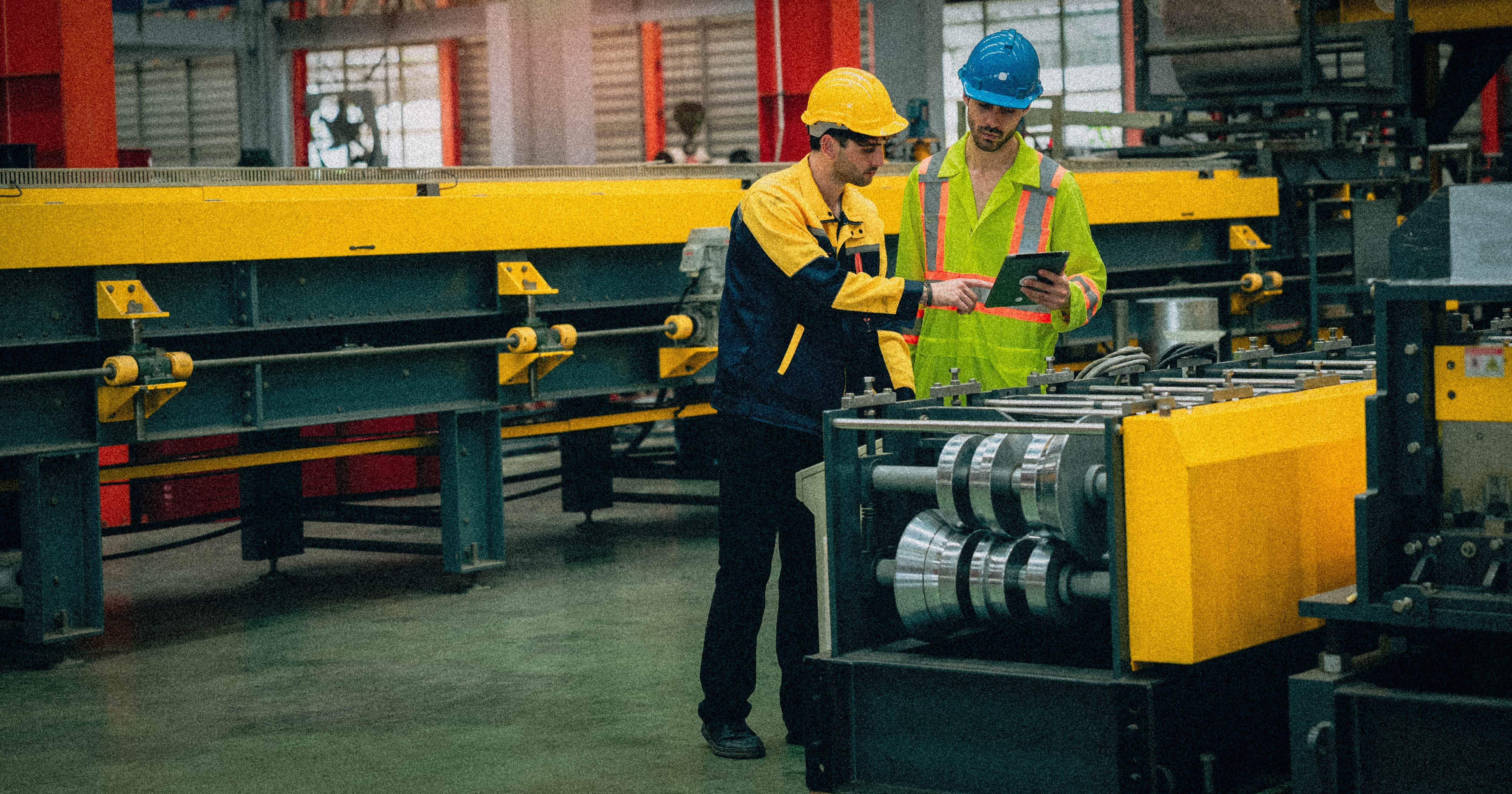
But as a project manager in the building trades who has been watching these young folks begin to enter into these fields, I have a quite different perspective toward Gen Z. I think they are the key to finally addressing the skilled trade shortage and rebuilding industrial capability in America.
I have seen a large swathe of these broccoli haircut-laden creatures enter into the trades and become my co-workers in recent years. For as much as I hear grumbling from the outrage market of media commentators and older folks about these little monsters—being aimless, having the attention spans of goldfish, and being lazier than tranquilized sloths—the real picture tells a different story.
A recent survey of nearly 1,500 Gen Z respondents found that 42% of Gen Z workers are currently working in or pursuing blue-collar careers. Of those engaged in or pursuing blue-collar work, 37% possess college degrees. The reasons given for pursuing a career outside of a typical college pathway are similar regardless of education level: Gen Z workers believe blue-collar careers offer better long-term security, that they are less likely to be replaced by AI, they prefer the hands-on work, they believe skilled trade work is in higher demand, and they believe they can make more in a career in the trades.
Additionally, the Wall Street Journal reported this year that unemployment for prime-age workers without a college degree has rarely been lower in two decades (4.7% for high-school-only workers, actually converging toward the 2.7% rate for degree-holders) while young college graduates are facing some of the toughest employment barriers since the 2008 crash. Meanwhile, a four-year degree can run a person into tens of thousands of dollars of debt—sometimes into six-figure sums—compared to a nearly or completely free apprenticeship program. This merits the understanding that the trades aren’t a fallback career path, or a better-than-nothing profession. The trades are trending towards outperforming the alternative on the only two numbers that matter to a 19-year-old deciding what to do with himself: will I get hired, and can I afford to try.
Some of this is push as much as pull as far as Gen Z’s interaction with a decision to enter a career in the trades. A recent New York Times piece states that 1.4 million trade jobs are projected to sit unfilled by 2030 as retirements continue to outpace replacement rates. The pay for skilled tradesmen underscores the urgency of that number as well. IBEW electricians are making on average $90,000 a year, HVAC techs who go into business for themselves are clearing six figures, wind turbine technicians are averaging in the $80,000-$90,000 range.
Despite this, it appears the culture of perception is still fighting against reality; 71% of Gen Z still say trade school carries more stigma than a four-year degree, and only 7% say their own parents would actually prefer it for them. This isn’t a generation that stumbled into the trades because permission was finally granted. It’s one choosing this path because the math does not lie. Facing and overcoming a stigma is better than allowing perception and ignorance to keep an entire generation from claiming a secure future for themselves, particularly a future that is within reach at this very moment.
This trend seems to be growing. According to a recent survey conducted of 1,250 Gen Z respondents, 60% of those surveyed plan to pursue careers in construction. A Harris Survey conducted a year earlier found that only 36-38% of Gen Z respondents felt this way. The shift of nearly a quarter of respondents to the affirmative likely indicates one of two things is going on. Either one or the other surveys had a sample group that coincidently skewed toward one conclusion too heavily, or, there was a massive year-to-year growth of interest in pursuing these professions. From what I have seen personally, that huge growth among Gen Zers seems like the more likely cause.
At the company I work for, the field staff is skewing younger and younger over the past couple of years. This isn’t merely because electricians are retiring and being replaced at an equal rate. In fact, we all know that this hasn’t been happening because for a couple decades we have all heard endlessly about the skilled tradesman shortage—as mentioned here already. But we are starting to see the younger population at our firm bloom beyond our necessary replacement rates.
And the applicant pool continues to grow. As the data center boom continues to affect Ohio, it is driving up demand and wages for electricians—along with plenty of other skilled trades—and Gen Z is capitalizing on the opportunity. Also notable, more and more of the Gen Z applicants that we hire are coming from vocational high schools, showing an intentionality from a younger age that Gen Z is starting to have toward a career in the trades.
This is in stark contrast to my own story, and the story of many of my millennial and older co-workers, where we ended up in the trades because we simply needed a secure job and fell into the trades in a more spontaneous fashion. I was a grunt in a color pigment factory after high school for several years before I found glory and broader opportunity in the building trades.
The second, and more anecdotal, reason I am bullish on Gen Z’s influx into the skilled trades is that there is an obvious hunger for professional and practical satisfaction that the trades are uniquely suited to provide. The Annie E. Casey Foundation published a piece in 2024 which references a Gallup survey that shows that “the biggest driver of Gen Z happiness is their sense of purpose at either school or work, but 43% to 49% of Gen Zers ‘do not feel what they do each day is interesting, important or motivating.’” Recently, I asked a young electrical apprentice about why he entered the electrical trade. He replied:
Beyond being financially smart? I wanted a job where I actually made things that take up space in the real world. For the first time in my life, I’m actually seeing what I am learning play out in front of me—because my hands are making it happen. Two years ago, I had barely ever picked up a hand tool. Now I am building panels, wiring up big equipment, installing lighting controls—all kinds of things. Also, everyone calls me to help fix stuff now. It makes me realize how little I ever did anything concrete, or real, before this.
One of the things I love most about my job is when I have the opportunity to talk with my co-workers—whether they are apprentices, journeymen, or foreman—and hear things like this come out of their mouths. Here you have a young Gen Z worker who has excavated philosophical depth in the minutiae of his work. If you set aside whatever quantitative reasons that are driving people into blue-collar work, you will find plenty of the inarguable reasons as to why this work is meaningful to a human being. His response brought to mind my own sentiments toward my work and why I enjoy it. It serves as a concrete example, one of many, of how Gen Z’s entrance into the trades cuts against the grain of what society expects from them. These are people searching for meaning, value, and the ability to concretely express those things. Despite often being perceived as a herd generation—all with the same haircut, same clothes, same crooked-over posture from staring at their phones—you can come to see them as a generation totally interested in and dedicated to doing work that grants both security and meaning. A sentiment that, for many decades now, was predominately isolated toward college pathways. One has to respect the guts that Gen Z has to swim against the tide in this regard.
I asked if he had any regrets about not going to college.
“Uh, no—” he chuckles, “I think I’d be miserable. Everyone my age has spent so much time sitting and being in front of a screen throughout childhood. The prospect of that also being what my career consists of for 40 years literally sounds like hell.”
It’s important to remember that these changes in worker sentiment take place at a moment when the building trades are inevitably going to be reshaped in the coming decades by further technological integration—AI, automation, and computing abilities being essential to troubleshooting and installation. These are all aspects of work that Gen Z will be uniquely equipped to handle as a generation intimately familiar with technology and its integration into human life. We’re already seeing this in the numbers, too.
Randstad’s analysis of job postings found that since generative AI went mainstream in late 2022, demand for robotics technicians has climbed by 107%, industrial automation technicians by 51%, and HVAC engineers—critical for cooling the data centers driving so much of this boom—by 67%. The skilled trades aren’t being left behind by this shift; they’re being pulled forward by it, up 27% over the past four years. I’d ask you to recall the hypothesized 22% growth in Gen Z interest in skilled trade careers over the past year that I mentioned earlier. The sentiment is tuned almost exactly to demand. Indicative of a generation preparing to answer a call.
I find the default negative posture of some toward younger generations to be quite boring and lame. And in this case, also unfounded. If reindustrialization and reigniting access to the American dream has truly been the goal of conservatives over the past ten years, there are traces of it on the horizon. The worst thing we could do is fail to encourage the once and future generations that these goals were supposedly undertaken for. Yes, Gen Z may be synonymous with technological distraction and whatever else today’s youngins are plugged into. But I would remind you that you were also likely a goober at one point before you got down to business and built your future. I am excited to see the next generations build theirs.

It’s nice to read something positive. My brother worked for a guy who installed and repaired bakery ovens, and when his boss retired, my brother had enough training that he bought the business. He’s worked hard, and he’s been extremely successful. Now his son has gotten into carpentry. He has a 4-year college degree, but learning a trade has also allowed him to start his own business.
We have friends whose grandson is doing extremely well in the cement business. He also has a 4-year degree, but started working for a guy who installed cement. Now their grandson has his own business.
What I admire about both of these young men is they’ve invested in equipment, but they found good used equipment. Both bought used trucks, as well. They’ve picked up quality tools from places like Habitat for Humanity. I’m guessing some of their tools are new, but I’m really impressed that they saved money by looking for well maintained, used equipment.
Good. This actually good even if you end up being wrong as it shows a cross-generational affinity which is all too rare. As a Boomer, I am very tired of being blamed for everything that happened when we were alive even though we weren't actually in charge of anything. In some cases, we get blamed for stuff that happened before we were born, like Social Security. So carry on and help those Zoomers and Alphas find their place in the world. We need them